Hey everyone, if you’ve ever wandered into an open-office space, a busy café with that weird echo that makes it hard to hear your friend over the espresso machine, or even a studio where a band’s tracking vocals and the room sounds way too boomy, you’ve probably wondered—what the heck fixes that? As a wire mesh panel supplier, this is basically the question I get asked every single day. Like, people see these thin metal mesh panels hanging on walls or ceilings and go, “Wait, does that stuff actually do anything for sound? Or is it just for looks?” Today, I’m breaking down the real acoustic performance of wire mesh panels—no fancy jargon, just the straight stuff from someone who sells these things for a living, not a textbook. Wire Mesh Panel
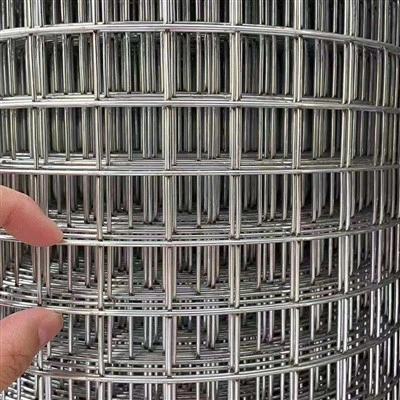
First off, let’s get one thing straight: wire mesh panels aren’t magic soundproofing material. If you’re trying to block a loud highway noise from your bedroom, these aren’t going to replace a solid concrete wall or heavy double-pane windows. But if you’re dealing with echo, reverberation, that annoying “room echo” that makes speech sound muddled, or even balancing sound in a space (like a band practice room or a retail store that’s too echoey), these panels work way better than most people think—but only if you know how they’re built.
Let’s talk about how wire mesh is made, because that’s where the acoustic magic starts. Not all wire mesh is the same, right? We’ve got different wire gauges (thicknesses—thinner wire = more flexible, thicker = sturdier), different hole sizes (from tiny pinpricks to big slits), and different weave patterns. Some are plain woven, some are crimped, some are even coated on the back. The acoustic performance depends almost entirely on these three variables, not just the mesh itself. Here’s the quick breakdown: the holes in the mesh, combined with what’s behind it, is what controls how much sound it absorbs.
Wait, right—you can’t just hang a single sheet of mesh on a wall and call it an acoustic panel. Most good wire mesh acoustic panels have two parts: the mesh face, and a backing cavity filled with some kind of absorbent material, like fiberglass or mineral wool. That’s where the science comes in. Sound is basically vibrations in the air, right? When those vibrations hit the panel, some bounce off (that’s the echo you hate), some get absorbed by the panel, and some pass through. The mesh’s holes let sound enter the cavity, and the absorbent material inside catches those sound vibrations, turning them into tiny amounts of heat—so they don’t bounce back.
Now, let’s get into numbers, but keep it casual. The absorption coefficient—this is the standard way people measure how well a material soaks up sound, right? It’s a number from 0 to 1, where 0 means it absorbs nothing, 1 means it absorbs 100% of sound. Solid concrete has an absorption coefficient around 0.02, so almost nothing. A typical closed-cell foam might be around 0.6, while a quality wire mesh acoustic panel with a 2-inch cavity and fiberglass behind it can hit 0.7 to 0.9 across mid and high frequencies. Wait, mid and high frequencies—what does that mean? That’s the sounds you care about for speech and music clarity: a person’s voice, piano notes, guitar chords. The thin mesh is perfect for targeting those because high-frequency sound (like a bird chirp or a high note on a synth) has short wavelengths, so it easily passes through the mesh’s small holes to get to the absorbent stuff behind.
But what about low frequencies? Those are the deep rumbles, like a bass guitar or a distant subway rumble—those have long wavelengths, so they’re way harder to absorb. Here’s where we tweak the panel to make it work for lows too. If we make the backing cavity deeper—say, 6 inches instead of 2—we can boost the absorption for lower frequencies. Because the long sound waves have more space to vibrate in the cavity before hitting the absorbent material, so more of them get caught. I’ve had a couple of studio clients come to me complaining that their bass was echoing way too much, and we switched their 2-inch cavity panels to 4-inch ones, and they told me the clarity went from “muddy” to “we can hear every note clearly.” No joke, that’s a common fix.
Another big factor: the mesh’s hole size and weave. If you have tiny holes in the mesh, less sound gets in, so lower absorption. If you have bigger, more open holes, more sound passes through—great for high frequencies, but you have to make sure the backing is thick enough to catch all that sound. We also offer coated mesh sometimes, for spaces where moisture is a problem (like a restaurant kitchen or a pool area) because regular metal mesh can rust, and the coating doesn’t mess with the acoustic performance at all—we tested that, don’t worry.
Now, let’s talk about where wire mesh panels outshine other acoustic materials, because that’s why they’re so popular these days. A lot of old-school acoustic panels are those ugly gray fiberglass boards that you hide behind fabric. They work, but they’re not exactly decorative. Wire mesh panels? They look sleek, industrial, modern—you can get them in different finishes (silver, black, even colored powder coat) so they double as art and acoustic treatment. I just finished a big project for a co-working space where they didn’t want their walls to look like a school’s music room, so we used matte black wire mesh panels with white fiberglass behind them—you can’t even tell they’re acoustic panels at first glance, until you walk in and notice how clear the conference calls sound. That’s a huge win for clients who want function and style.
But wait, there are limits, and I should be honest about that (no one likes a salesperson who overpromises). If you’ve got a space that’s super reverberant—like a 10,000-square-foot warehouse with 20-foot ceilings—you’re gonna need a lot more than a few wire mesh panels on the walls. We recommend installing them on all hard surfaces, maybe even hanging them from the ceiling in a grid, to cover more area. Also, like I said earlier, they don’t block sound (that’s soundproofing, not absorption). If your neighbor’s loud dog is barking through the wall, a wire mesh panel won’t muffle that—you need mass-loaded vinyl or a solid door for that. But for within the space, fixing echo and making speech/music clear? They’re one of the best options out there, especially for nice-looking spaces.
Let me share a quick real example, since I do this every week. Last year, a small independent café came to me. They had exposed brick walls, a tin ceiling, and 20 seats, but it was impossible to have a conversation over the espresso machine and the blaring indie playlist. Customers were complaining they couldn’t hear their friends, and staff had to yell to take orders. We installed 8 4×4 foot wire mesh panels on the tin ceiling (hung about a foot down, so they had a cavity behind them) in a pattern that matched their vintage light fixtures. The change was insane—they told me within a week, no more yelling, conversations were natural, and the playlist still sounded warm, not echoey. All we did was add those 8 panels, and it fixed their whole problem. That’s the kind of thing that makes me love this job—we’re not just selling metal sheets, we’re making spaces people can actually enjoy.
Now, let’s clear up a common myth: a lot of people think all metal panels are the same for acoustics. No way. I’ve seen cheap wire mesh panels that are just a thin sheet of mesh glued to a piece of cardboard, no cavity or absorbent material—those basically do nothing. They look like wire mesh, but they won’t absorb any sound. The difference is in the construction: a quality acoustic wire mesh panel has a rigid frame (usually aluminum or steel) to hold the mesh tight, a properly sized cavity, and high-quality absorbent material that’s not going to off-gas or fall apart in a year. I always tell clients to ask their supplier to send a sample and the independent lab test data for absorption coefficients—any good supplier will have that, no problem.
Another thing people ask: do wire mesh panels affect sound quality for music? Like, if you’re a musician recording in a home studio, will these panels make your vocals sound thin or your guitar sound muffled? The short answer is: no, if you install them right. Because they target the echoes, not the actual sound. Let’s say you’re tracking vocals—if your room has a lot of echo, the vocal track will have that “double” sound, and you’ll have to edit it out later. Adding wire mesh panels absorbs that echo, so the track is clean from the start, and you can even add reverb later if you want. I have a few regular customers who are home studio owners, and they swap out their old foam panels for mesh ones because their clients say the mixes sound more “natural,” not like they were recorded in a closet with foam.
So, to wrap this up, let’s recap the acoustic performance basics that matter:
- Wire mesh panels are acoustic absorbers, not sound blockers—they fix echo and clarity, not stop outside noise.
- Their absorption depends on hole size, wire thickness, and the backing cavity + absorbent material behind them. Quality panels hit 0.7-0.9 absorption for mid and high frequencies, which is perfect for speech and music.
- For lower frequencies, deeper cavities help boost absorption, so they work for bass in studios too.
- They’re way more stylish than traditional acoustic panels, which is why they’re blowing up in offices, cafes, studios, and even retail stores.
- Skip the cheap ones—always go for panels with a rigid frame and lab-tested absorption data, or you’re wasting your money.
If you’re reading this and dealing with a space that’s too echoey, whether it’s a home office that sounds like a gym, a café where no one can chat, or a studio that’s muddy, I’m here to help. We can work with you to figure out how many panels you need, what size, what finish, to get the sound right without ruining the look of your space. Just reach out to chat about your project—no pressure, just straight talk about what works for you.
High Visibility Screen Reference:
- Beranek, L. L. (2015). Acoustics: Sound Fields and Transducers. Academic Press.
- International Organization for Standardization. (2019). ISO 354: Acoustics – Measurement of sound absorption in a reverberation room. ISO.
- Hinders, M. K. (2008). Sound Absorption Materials: Theory and Applications. CRC Press.
Anping County Nuocheng Wire Mesh Co., Ltd.
As one of the most professional wire mesh panel manufacturers and suppliers in China, we also support customized service. Please feel free to buy high quality wire mesh panel for sale here from our factory. For price consultation, contact us.
Address: 100 meters southeast of Beimanzi Village, Dahezhuang Township, Anping County, Hengshui City, Hebei Province, China
E-mail: lixuhao0888@gmail.com
WebSite: https://www.ncwiremesh.com/
