As a long-time water stopper supplier who’s spent countless hours on job sites, in material testing labs, and sitting across tables with engineers and construction foremen, I’ll tell you this: most people sleep on how critical a good water stopper is. You can pour the best concrete in the world, design the most aerodynamic building, but if water finds its way through the expansion joints, structural cracks, or construction seams, you’re looking at years of leaks, corrosion, and expensive repairs that no budget accounts for. Over 18 years in this industry, I’ve seen bad water stoppers cause basements to flood, parking garage support beams to rust, and even bridge expansion joints to fail prematurely. That’s why I want to break down exactly what makes a high-quality water stopper—what I teach my own team, what I vet in every material that comes to our warehouse, and what I advise customers to demand when they’re specifying one for their next project. Water Stopper
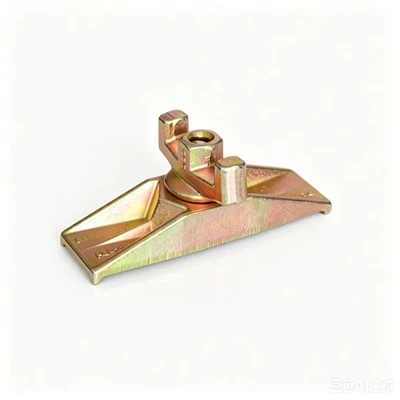
First, let’s start with the basics: what a water stopper is, in case you’re not deep in construction specs. It’s a flexible, or semi-rigid, strip installed in the joints of concrete structures—think expansion joints (where concrete shifts as temperature changes), construction joints (where new concrete is poured after a previous pour has cured), or cold joints (unplanned gaps between concrete placements). Its job is to create a continuous, watertight barrier so water can’t seep through the gaps, no matter how much the structure moves over time. A cheap water stopper will crumble, stretch too thin, or pull loose at the first sign of movement; a high-quality one works for the entire design life of the structure—usually 50, 75, even 100 years, depending on what you’re building.
One of the first non-negotiable features is material consistency, and I don’t just mean “it feels like rubber.” Most standard water stoppers are made from polyvinyl chloride (PVC), but not all PVC is equal. Cheap stoppers use reprocessed PVC—old plastic scrap, leftover factory waste, and filler materials like chalk or limestone that cut costs but don’t hold up. Our team only works with virgin PVC, mixed with precise ratios of plasticizers, stabilizers, and UV inhibitors. Why does that matter? Let’s test it. Last year, we brought in two samples: one from a big-box supplier’s budget line, and one from our standard product. We stretched both to twice their original length. The cheap one snapped like a dry spaghetti noodle; ours stretched easily to 2.5 times its length and bounced right back, no cracks, no deformation. That’s elasticity that matters. For every 10 degrees of temperature change (from -20°F in a northern winter to 120°F in a southern summer), a concrete structure expands or contracts by about 0.01%. A water stopper that can’t stretch with that movement is going to tear at the seam.
Another key material spec is hardness, measured in Shore A durometer. A good water stopper should have a Shore A rating between 60 and 75. Too soft (below 60) and it’ll get compressed by the weight of the concrete, losing its shape and the watertight seal over time. Too hard (above 75) and it’s too rigid to bend around rebar or fit into irregular joint gaps. I learned this the hard way on a small retail project 12 years ago. We used a super-hard water stopper to save a few cents per foot, and when the concrete shifted, the stopper didn’t flex—so gaps opened up where the stopper met the rebar. Within a year, the basement storage area was leaking, and we had to pull out half the foundation wall to re-do the joints. That’s a mistake I don’t make anymore.
Next, the design of the water stopper itself. A high-quality water stopper isn’t just a flat strip; it has a profile built to interlock with concrete and create a dual seal. The two most common profiles are center bulbs and multiple ribs. Center bulb stoppers have a large, rounded middle section that sits in the joint, so when concrete is poured on both sides, the bulb is compressed, creating a rubber seal that stops water from going past. Multiple rib stoppers have flat, ridged sides that embed into the concrete, creating more contact surface. The best ones combine both: a center bulb with two sets of side ribs, sometimes called a “dual-rim bulb stopper.” Why? The ribs stop the stopper from pulling out of the concrete, and the bulb takes up movement. On high-stakes projects, like water treatment plants or underground subway tunnels, we also add a waterstop with a built-in adhesive flange—this lets you bond the stopper to formwork before pouring concrete, eliminating gaps where water can seep in from the sides.
One thing people overlook in design is the cross-section of the stopper. A high-quality water stopper for structural joints (the ones that move the most) should be at least 10 mm thick, with a center bulb diameter of 15 mm. Cheap stoppers are often 5 mm thick, so when concrete vibrates during pouring, the stopper compresses too much, and the bulb flattens out, leaving no seal. We once had a customer bring us a sample from a job where they’d used a 6 mm stopper for a warehouse floor expansion joint. Within three months, the bulldozers driving over the slab compressed the stopper so much that the joint started leaking water when it rained. We replaced it with our 12 mm thick stopper, and five years later, that joint is still dry.
Then there’s the critical test: compatibility with concrete. A water stopper that works in a lab might fail in the field because it doesn’t bond with concrete. Why? Some materials leach chemicals that prevent concrete from curing properly, or they’re too smooth, so the concrete can’t grip the stopper. High-quality PVC water stoppers are formulated with a surface texture—usually a light, etched pattern on the side that contacts concrete—to create a mechanical bond. We also run a test where we pour concrete around a stopper, cure it for 28 days (the standard curing time for structural concrete), then pull the stopper out. If the concrete breaks before the stopper pulls free, that’s a good bond. If the stopper slides out of the concrete, that’s a no-go.
We also test for chemical resistance, which is huge for projects near industrial sites, wastewater treatment plants, or coastal areas with saltwater. A cheap water stopper will break down when exposed to acids, salts, or petroleum products. Last year, we supplied a coastal parking garage project, and one of the competitors’ stoppers used there started cracking after 18 months from salt exposure. Our stoppers have extra stabilizers that resist corrosion from salt, and we test them by submerging samples in 5% salt solution for 90 days. The cheap sample lost 30% of its tensile strength, while ours lost less than 5%. For industrial projects, we also offer water stoppers that are resistant to mild acids and alkalis—we don’t cut corners on those formulas, even if it means a slightly higher cost.
Durability over time is another marker of a high-quality water stopper. Most suppliers advertise a 50-year lifespan, but that’s only if the material is formulated correctly. We use accelerated aging tests: we expose water stopper samples to UV light for 1,000 hours (equivalent to 25 years of sun exposure) and extreme temperature cycles to simulate freeze-thaw conditions. After testing, our samples retain 85% of their original elasticity and tensile strength. Cheap stoppers, on the other hand, become brittle and crack after 500 hours of UV exposure. I’ve seen water stoppers on a 30-year-old hospital parking garage that we supplied still work perfectly—no leaks, no damage—because we paid attention to durability from the start.
Let’s not forget about installation, because even the best water stopper is useless if it’s installed wrong. A high-quality water stopper should be easy to work with, even for a crew that’s not trained in specialized installation. Our stoppers are lightweight enough to carry on a construction site, easy to cut with a utility knife, and can be spliced with hot air welding or a specialized adhesive (we supply both to our customers for free, no extra charge). We also provide clear installation guides with every shipment, and our team is on call 24/7 to walk foremen through tricky jobs, like installing stoppers around rebar or in curved joints. I’ve had customers tell me they tried to use a competitor’s water stopper and couldn’t splice it without gaps—ours goes together in 5 minutes per 10-foot section, no special tools needed.
Now, let’s address the elephant in the room: cost. A lot of customers look at water stopper and just go for the cheapest option, but that’s a false economy. Let’s do the math: a 100-foot roll of budget water stopper might cost $15, while our higher-quality roll costs $30. That’s a $15 difference, but if the budget stopper fails, you’re looking at $5,000 to $10,000 in repairs to fix the leak, plus potential downtime for the project. On the other hand, our stopper costs twice as much up front, but it eliminates that risk. I’ve had a customer who saved $2,000 on a bridge project by using a cheap water stopper—two years later, they spent $50,000 to replace the joints and fix a leak that was corroding the bridge’s steel beams. That’s not a deal; that’s a mistake.
Over the years, I’ve built my business on this: every water stopper we ship has been tested in our own lab, vetted for material quality, and backed by a 25-year warranty (longer than most competitors, because we know our product works). We don’t just sell a strip of rubber; we sell peace of mind for construction managers, engineers, and property owners. If you’re working on a residential foundation, a commercial parking garage, a water treatment plant, or a coastal infrastructure project, the right water stopper is the difference between a project that lasts and one that needs constant repairs.
If you’re in the market for a high-quality water stopper, or you want to learn more about how to specify the right one for your project, don’t hesitate to reach out to our team. We can provide material test reports, installation guides, and custom solutions for unique joint requirements. Whether you’re a general contractor, an engineer, or a property owner, we’re here to help you avoid the costly mistakes that come with using subpar water protection.
Cuplock Scaffolding References
ASTM International. Standard Test Method for Tensile Properties of Plastics. ASTM D638.
ASTM International. Standard Test Method for Rubber Property—Durometer Hardness. ASTM D2240.
National Ready Mixed Concrete Association. Guide to Joint Sealants and Waterstops for Concrete Structures. NRMCA Publication 215.
American Society of Civil Engineers. Sealants and Waterstops for Concrete Joints in Civil Infrastructure. ASCE Manual of Practice 126.
Rizhao Wellfit Scafform Co., Ltd.
Address: No. 7, Huasheng Road, Taoluo Town Industrial Zoon, Donggang District, Rizhao City
E-mail: sales@wfscafform.com
WebSite: https://www.wfscafform.com/
