Hi there, China To Australia Consolidation Shipping
I’m Maria, and for the last seven years, I’ve run a China-to-Australia consolidation shipping service that’s helped everything from small boutique retailers to part-time eBay sellers get their oversized goods across the ocean without the nightmare of overpaying for standard freight. Last week, I fielded a call from a Melbourne-based furniture maker who was panicking because she’d spent hours contacting big international carriers, only to hit a wall every time she mentioned her custom wooden outdoor tables—each unit 2.1 meters long, 0.8 meters wide, and weighing over 45 kilograms. “Can I even ship oversized goods via consolidation shipping?” she asked, voice tight with frustration. I get this question all the time, and honestly, it’s one of the most common misconceptions people have about consolidation services. Today, I’m pulling back the curtain on exactly how we handle oversized cargo, what works, what doesn’t, and how you can make this process smooth (and affordable, because that’s the whole point).
First, let’s get one thing straight: when most people hear “consolidation shipping,” they picture packing a bunch of small parcels—like a box of skincare, a pack of kids’ clothes, a stack of phone chargers—into one single container. That’s the core of what we do at our service, but “consolidation” doesn’t have a size limit. It’s about combining multiple shipments (yours, and ours from other clients) to fill a container or a dedicated LCL (Less than Container Load) space, cutting down on per-unit costs because you’re not paying for an entire 20ft or 40ft container alone. Oversized goods just mean we have to adapt that process a little, not rewrite the rulebook.
Let’s talk about the types of oversized goods we regularly handle for our China-to-Australia clients, because this is where most people get stuck. Last month, we shipped 12 industrial 3D printer enclosures from a factory in Shenzhen to Sydney; each was 1.8 meters tall and weighed 60kg. The month before that, it was 15 sets of custom bar stools from a workshop in Guangzhou to Brisbane, each measuring 1.2 meters high when assembled. We’ve also done oversized items that aren’t furniture or machinery: large-format art prints (rolled or framed to over 1.5 meters), commercial tent frames for a camping brand in Perth, even oversized fitness equipment like foldable treadmills (some models over 1.9 meters long). The key here is that these items fit what the industry calls “standard oversized dimensions” for LCL consolidation: between 1.5 meters and 2.5 meters in length, weighing between 30kg and 100kg each. If your goods are longer than 2.5 meters or heavier than 100kg, we can still work with you—we just might adjust the process to use a partial FCL (Full Container Load) instead, since oversized items that stretch too far usually need their own dedicated space to avoid damage from smaller parcels pressing against them.
Now, let’s break down how our consolidation process for oversized goods actually works, step by step, because this is where a lot of confusion happens. A lot of clients think “consolidation” means dropping their oversized item off at our warehouse in Guangzhou and leaving the rest to us—but for oversized cargo, there are a few non-negotiables we need to handle together to keep costs low and avoid delays.
First, we start with pre-shipment dimension and weight verification. This isn’t just a formality. When you ship oversized goods, dimensional weight matters a lot more than it does for small parcels. For example, a 2-meter-long wooden table that weighs 50kg might have a dimensional weight (calculated by multiplying length x width x height in cm, then dividing by 5000) of 160kg—so you pay for the higher of the two, not the actual weight. We always ask for exact measurements (no rounding up!) and photos of the item when you request a quote, because this lets us choose the right consolidation path: LCL, partial FCL, or even a dedicated oversized LCL slot that carriers reserve specifically for goods that don’t fit standard pallet sizes. Last quarter, a client tried to round up his 2.2-meter-long sofa to 2 meters for a quote, and when we unpacked it at our warehouse, the dimensional weight ended up being 220kg more than he budgeted for. That’s a headache we avoid by being transparent about measurements early on.
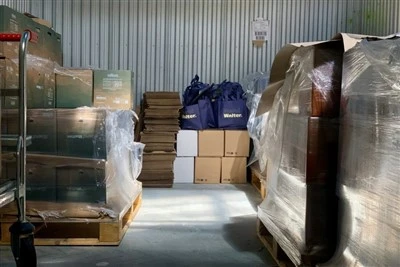
Next, packing and labeling for oversized cargo at our China warehouse. This is where our service stands out from big carriers. When you ship small parcels, our warehouse team just stacks them neatly on pallets or wraps them in stretch film. For oversized goods, we have a dedicated team that specializes in crating and padding for items like furniture, machinery, and fragile oversized goods (like those 3D printer enclosures). We use custom corrugated crates for delicate items, wrap wooden furniture in foam padding to prevent scratches during transit, and secure long items with heavy-duty straps so they don’t shift during container loading. We also use high-visibility labels for oversized items—bright orange stickers that say “OVERSIZE CARGO, DO NOT STACK” and include the dimensions and weight, so every handler along the route knows to treat it carefully. Last year, a client shipped a set of custom surfboard racks from Foshan to Adelaide, and because we labeled the cargo clearly and packed it on a dedicated pallet that didn’t get stacked with other items, it arrived with zero scratches. If we’d let a big carrier handle it, it would have likely been stacked under smaller, heavier parcels and damaged.
Then comes the consolidation and shipping leg to Australia. Here’s where consolidation actually saves money for oversized goods, which is the whole point. If you shipped that 2-meter table directly via a standard international courier, you’d pay a premium for oversized surcharges that can add 50% or more to your cost. With our consolidation service, we combine your oversized items with other clients’ non-oversized or moderately oversized goods, so we split the container space and handling fees evenly across multiple shipments. For example, when we shipped those 12 3D printer enclosures last month, we had two other clients in Guangzhou shipping parts to Sydney and Melbourne, so we filled half a LCL container with all three shipments. The oversized surcharge we had to pay was minimal, because we spread it across three different clients instead of passing it entirely to one. The only catch here is that consolidation for oversized goods takes a little longer than standard small parcel consolidation—usually 18 to 22 days from Guangzhou to Sydney or Melbourne, compared to 12 to 15 days for standard parcels. That’s because oversized goods have to be prioritized for container loading to avoid delays, and sometimes have to clear customs separately if they’re large enough to require a special inspection. We always communicate this timeline clearly upfront, so no one is surprised.
Once the cargo arrives in Australia, our local team takes over in Sydney, Melbourne, Brisbane, Perth, or Adelaide (we have branches in all four major cities). For oversized goods, we offer two delivery options that most consolidation services don’t: curbside delivery and inside delivery. Curbside delivery is for clients who can move large items themselves—our team will drop the pallet of oversized goods at the edge of your property or warehouse. Inside delivery is optional, and our local team will bring the item inside your building, even carry it up stairs if you let us know in advance. For a client in Melbourne who owns a small café, we delivered a set of custom wooden tables inside the café, no extra hassle, because we planed for that during the pre-shipment stage. Big carriers often charge triple for inside delivery of oversized items, but we include it in our standard consolidation fee for goods under 2 meters long.
Now, let’s talk about the limits, because no service is perfect, and we’re transparent about that. Oversized goods via consolidation shipping aren’t for every item. If your goods are longer than 2.5 meters, heavier than 100kg per unit, or require custom crating that costs more than 15% of the item’s value, we might steer you towards a dedicated FCL container instead. For example, a client tried to ship a 3-meter-long metal gate from Qingdao to Perth earlier this year, and after calculating the dimensional weight, the cost of crating it, and the oversize surcharges, it was cheaper to book a half FCL container just for that one gate and a few smaller items. We never push consolidation if it’s not the most cost-effective or safe option for your goods—our job is to find what works for you, not just make a sale.
Another common myth we get is that consolidation shipping for oversized goods is less secure than standard shipping. That’s just not true when you work with a reputable provider like us. We offer full cargo insurance for all oversized shipments, and we take photos and videos of every step of the process: when we load the item into the container, when it arrives in Australia, and when it’s delivered to you. Last year, a client shipped a vintage metal sign (1.8 meters long) from Shanghai to Brisbane, and it got a small scratch during loading. We filed the insurance claim for him, and he got full reimbursement within two weeks. Big carriers often delay insurance claims for months, but our local team in Australia handles all claims directly, so there’s no red tape.
If you’re still on the fence about whether your oversized goods qualify for consolidation, here are a few quick checks to do before you reach out. First, measure your item’s exact length, width, and height (don’t forget to include packaging, because that’s what carriers use to calculate dimensions). Second, weigh it accurately. Third, think about how it will fit on a standard pallet: most oversized goods for consolidation need to fit on a standard 1.2m x 1m pallet without extending beyond the edges by more than 20cm. If it does extend more than that, we can still handle it, but we might need to adjust the pallet size for a small extra fee. Finally, decide where it’s going in Australia—our service has branches in all major cities, but delivery to regional areas (like Darwin, Hobart, or Gold Coast) might add 3 to 5 days to the timeline, since we have to coordinate with local couriers for final delivery.
Let me circle back to that furniture maker I mentioned at the start. She was shipping four custom wooden tables from Shenzhen to Melbourne, each 2.1 meters long, 0.9 meters wide, and 55kg. I sent her a quote that was 30% cheaper than the direct carrier quote she’d gotten earlier, explained the timeline (20 days total), and told her about our crating and delivery process. She sent over photos and exact measurements, our warehouse team crated the tables with foam padding and a custom wooden crate, we consolidated them with three other clients’ shipments to Melbourne, and the tables arrived on time with zero damage. She texted me a photo of them set up in her showroom last week, and said she already has another order of six more tables coming next month. That’s the kind of win we live for at our service—helping small business owners get their goods across the ocean without breaking the bank.
At the end of the day, the answer to “Can I ship oversized goods via China to Australia consolidation shipping?” is a resounding yes—if you work with a provider that knows how to adapt the process to your specific items, is transparent about costs and timelines, and has the local and global network to handle oversized cargo safely. We don’t treat oversized goods as afterthoughts; we have a dedicated team and process built exclusively for them, so you don’t have to worry about overpaying or dealing with damage.

If you’re ready to get a quote for your oversized goods, or just have more questions about how consolidation shipping works for your specific items, feel free to reach out to our team to discuss your needs. We’re here to help make your China-to-Australia shipping process as smooth and affordable as possible.
China To Australia Consolidation Shipping References:
- International Air Transport Association. (2023). Oversized Cargo Shipping Guidelines for LCL Consolidation.
- Federal Chamber of Automotive Industries. (2022). Cargo Shipping Standards for Australia Border Clearance.
- China Containerized Freight Index. (2023). LCL Shipping Rates for Oversized Goods: Trans-Pacific Route.
- Australian Competition and Consumer Commission. (2022. Transport and Delivery Consumer Rights for Large Goods.
Shenzhen Kuaihui International Logistics Co., Ltd.
Shenzhen Kuaihui International Logistics Co., Ltd. is a leading China-Australia dedicated logistics service provider in China. As a professional agent and platform, we are committed to providing high quality china to australia consolidation shipping with low price. Welcome to contact us for pricelist.
Address: 3rd Floor, Building 6, Nanbiantou Industrial Zone, Xifang, Songgang Street, Bao’an District, Shenzhen City, Guangdong Province
E-mail: info@kkhwl.com
WebSite: https://www.kuaihuiexp.com/
