Hey everyone, if you’ve ever been deep in the market for components that hold their shape under pressure—think automotive suspension parts, industrial springs, even those tiny wire loops in electronics—you’ve probably bumped into spring steel wire. As someone who’s spent the last 12 years in the spring steel wire game (I’m a supplier, full transparency), one of the most common questions I get from builders, machinists, and small business owners isn’t even about how much it costs. It’s this: “What’s the density of spring steel wire?” Spring Steel Wire
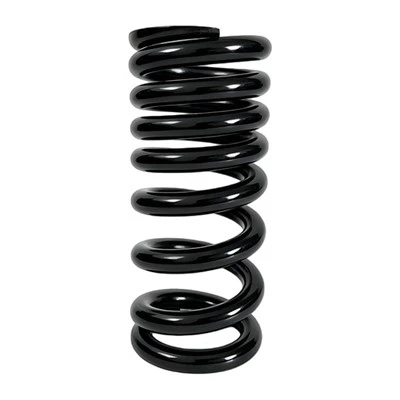
I get it. Density matters more than most folks realize when you’re designing something that needs to perform consistently, weigh a certain amount, or fit into a tight space. Way too many people just guess “it’s steel, right? So 7.85 g/cm³” and call it a day. But here’s the thing—spring steel wire isn’t just run-of-the-mill carbon steel. It’s been heat-treated, drawn, and processed specifically to handle repeated stress, tension, and compression. All that processing tweaks the density a tiny little bit, and that tiny tweak can throw off a whole project if you don’t account for it. Let’s break this down like we’re chatting over a coffee at our warehouse loading dock, no stuffy textbook jargon.
First, let’s start with the basics. If you’re not a metallurgist (and honestly, most of my customers aren’t—they’re out there building stuff, not memorizing atomic weights), density is just how much mass is crammed into a given space. For example, if you have a 1cm x 1cm x 1cm block of pure iron, it weighs ~7.87 grams. Add a little carbon (which we do in spring steel to make it strong), that number drops just a hair. Regular mild steel used for nails or random construction is usually around 7.85 g/cm³. But spring steel? We’re talking higher carbon content—think 0.5% to 0.95% carbon, sometimes even a dash of manganese or silicon to boost toughness. Carbon is lighter than iron, right? So that small bump in carbon content pulls the density down a little.
Wait, but there’s more than just the chemistry of the metal itself. The way spring steel wire is made changes density too. We don’t just cast a big ingot and saw it into wire—we hot-roll it first, then cold-draw it through a series of dies to get that tight, uniform diameter. Cold drawing works by stretching the metal, which compacts the grain structure. So after cold drawing, the wire’s density is actually a tiny bit higher than the same steel in a hot-rolled bar. Like, we’re talking 0.1% to 0.2% higher here—super small, but again, when you’re ordering a ton of wire for a production run, that adds up. If you ordered 10,000 kg of wire thinking it’s 7.85 g/cm³, but it’s actually 7.87 g/cm³, you might end up a few dozen kg short. That’s the kind of math that makes production managers call me at 9 a.m. on a Monday, panicking.
Now, let’s get specific about actual numbers, because that’s what most people show up for. For most common spring steel wire grades—like music wire (the super strong stuff used for guitar strings, small precision springs, and medical devices), hard-drawn spring wire, and oil-tempered wire—the standard density hovers around 7.85 to 7.87 g/cm³. Wait, so where does that 7.85 number come from? It’s the average for plain carbon steels, and it’s a safe general rule of thumb for most spring wire, but the exact number depends on two big things: the alloy grade and how we processed it.
Take music wire, for example. That’s Grade 228 or 1095 in the US, right? It has higher carbon (up to 0.95%) and is drawn to such tight tolerances that its density is usually on the higher end—7.86 to 7.87 g/cm³. We test every batch of music wire we send out with a small density meter when it comes in from our mills, just to make sure we’re accurate for our customers. On the other end, oil-tempered spring wire (often used for heavier, less precise parts like farm equipment springs or large industrial fasteners) has a touch lower carbon, so its density is closer to 7.85 g/cm³. That makes sense because it’s not drawn as tightly as music wire, so the grain structure isn’t as compact.
But wait—what if you’re working with metric measurements, or you need density in kg/m³, or lbs/in³? Let’s do the quick conversions so you don’t have to Google it at 2 a.m. when you’re crunching numbers. 1 g/cm³ is equal to 1000 kg/m³, so spring steel density is 7850 to 7870 kg/m³. If you’re using imperial units, that’s 0.283 to 0.284 lbs per cubic inch. I don’t use imperial much these days, but I still keep a conversion cheat sheet taped to my office desk for the guys who work on old trucks or farm equipment.
Now, why does this matter so much? Let’s talk real-world examples, not just textbook stuff. Last year, we had a customer who made custom suspension springs for off-road trucks. He ordered 5000 meters of 4mm diameter spring steel wire, and he plugged 7.85 g/cm³ into his calculator. But his engineer didn’t account for the fact that we use cold-drawn Grade 1075 wire for that order, which has a density of 7.86 g/cm³. So he ended up with a batch that was 12 kg lighter than he expected. He had to re-calibrate his spring load calculations, which meant delaying his order for the truck season. That’s the kind of mistake that costs small businesses time and money—nothing fancy, just not knowing the exact density of the wire they’re actually using, not the generic steel number.
Another example: we work with a medical device startup that makes tiny guidewires for surgery. Those guidewires are made from ultra-fine spring steel wire, like 0.1mm diameter. For their design, the density is critical because the guidewire has to be a specific weight to handle navigation through blood vessels without weighing them down. If we’d sent them wire at 7.85 instead of 7.87, their calculations would have been off, and the guidewire might have been too heavy to use. That’s the stuff that makes double-checking density worth every extra minute in our warehouse.
Wait, are there any exceptions? Like, is spring steel wire ever a different density? Yeah, if we add other alloys—like chromium or vanadium—for even higher strength. For example, spring wire with chromium (common in valve springs for cars) has a density that’s almost identical, maybe 7.84 to 7.86, because chromium is almost the same weight as iron. The only time density changes a noticeable amount is if someone messes up the processing—like if the wire has tiny air pockets from bad drawing, which would lower density. That’s why we only work with mills that follow strict quality control, so our wire is as consistent as possible.
I’ve heard some people say “density doesn’t matter for springs, right? A spring’s strength is about the material, not weight.” But that’s only half true. If you’re calculating how much force a spring will exert, or how much deflection it will have under load, density ties into the mass of the spring, which matters for things like dynamic loading—springs that move a lot, like in car engines or washing machines. If the spring is too light (because of wrong density), it might not hold its shape over thousands of cycles, or it might vibrate too much. If it’s too heavy, it adds unnecessary weight to the product, which is a big deal for aerospace or electric vehicles, where every gram counts.
So, going back to the original question: what’s the density of spring steel wire? The short answer is, it’s usually between 7.85 and 7.87 g/cm³, depending on the grade and how it’s made. The long answer is that if you’re ordering wire for a project that needs precision, you should ask your supplier for the exact density of the specific grade you’re using—not just the generic steel number. That’s why our team always includes the actual density on the COA (Certificate of Analysis) for every batch we ship. We don’t want our customers making avoidable mistakes.
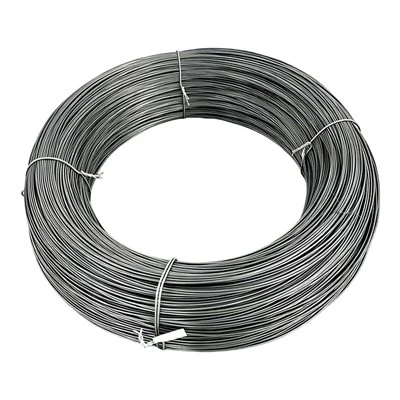
At the end of the day, I’m in this business because I’ve been around spring steel wire for my whole adult life, and I hate seeing good projects derailed by small, easily fixable details. If you’re currently working on a project, whether it’s a tiny guitar spring, a heavy-duty suspension, or something in between, and you need accurate density numbers for your spring steel wire, or you’re not sure which grade is right for your needs, hit me up. We don’t do pushy sales pitches here—we just send quality wire and answer your questions, no hoops to jump through.
Spring Steel Wire References
Callister, W. D., & Rethwisch, D. G. (2018). Materials Science and Engineering: An Introduction. Wiley.
ASM International. (2020). Spring Materials: Selection and Applications. ASM Handbook.
Metal Suppliers Association. (2022). Density Values for Common Metal Alloys. Technical Bulletin.
Baoding Zhongxin Spring Manufacturing Co., Ltd.
We’re known as one of the most reliable spring steel wire manufacturers and suppliers in China. With abundant experience, we warmly welcome you to buy durable spring steel wire made in China here and get pricelist from our factory. All customized springs are with high quality and competitive price.
Address: West Side, 200 Meters North of Chenzhuang Gas Station, Pangkou Town, Gaoyang County, Baoding City, Hebei Province, P.R. China
E-mail: 13292951555@163.com
WebSite: https://www.zhongxinind.com/
