Hey everyone! Washers

If you’ve ever dug into hardware parts (or even just tried to fix a wobbly shelf at home), you’ve probably seen those thin, metal rings that look identical at first glance—washers. But here’s the thing: if you’ve been grabbing whatever washer’s on the shelf at the store, you might be missing a super important distinction: hardened vs. non-hardened washers. And as someone who’s been supplying washers for over 8 years now (I still remember my first order slip, crumpled and coffee-stained), I can tell you this isn’t just a boring tech detail—it’s the difference between a job that holds up for years and one that’s a total headache a few months in.
Let’s start with the basics, no tech jargon promise. A washer is that little flat (or sometimes split) ring you slide over a bolt or screw before tightening a nut, right? Its whole job is simple: spread the load of the fastener so it doesn’t dig into the surface, keep things from vibrating loose, and seal small gaps. But when it comes to the metal they’re made from and how they’re treated, hardened and non-hardened washers are like night and day. Non-hardened washers are basically the “basic, no-frills” version. Think of them as the disposable utensils of the hardware world—cheap, easy to grab, and totally fine for small, gentle jobs. They’re made from mild steel or soft aluminum, and their manufacturing process is straightforward: stamp ’em out of a thin metal sheet, maybe give ’em a quick coat of zinc to stop rust, and that’s it. No fancy heating, no pressure treatment, just the bare minimum to get the job done. They’re soft—like, bend them with your fingers soft, or scratch them with a screwdriver soft. That’s why they’re perfect for stuff like hanging a picture frame, putting together a simple bookshelf, or securing a light switch plate. You’re not putting a ton of force on those, so a soft washer works great, and it’s way cheaper than a hardened one.
Now hardened washers? These are the tough guys. They’re made from the same mild steel as non-hardened, but they go through a whole extra process: heat treatment. It’s called quenching, basically you heat the steel to super high temps, then rapidly cool it (usually in oil or water) to make the metal way denser and harder. Some might also get a tempering step after that to make them less brittle than a glass—they can take a hit without shattering. The result? A washer that’s like 3-4 times harder than a non-hardened one, with a tensile strength that’s off the charts. Tensile strength, for the non-engineers reading, is how much pulling force something can take before breaking. Non-hardened might be around 50,000 psi, while hardened hits 150,000 psi or more. That’s a huge difference.
So why does that matter? Let’s get into the real-world use cases, because that’s what people actually care about. Let’s start with when to use non-hardened washers. If you’re doing small, low-stakes projects: DIY around the house, light commercial stuff like assembling store displays, or even fixing a bike rack that only holds a couple of bikes. The load here is light, the fasteners aren’t torqued super tight (torque is just the twisting force you put on a nut or bolt when tightening), and there’s not a lot of vibration. Non-hardened washers work here because they do their job without costing a fortune. I’ve had customers buy 10 packs of zinc-plated non-hardened washers for $2 and they’re happy—no need to overcomplicate things. But here’s the catch: if you use a non-hardened washer where a hardened one belongs, you’re gonna have problems.
Take a deck, for example. A lot of first-time DIYers grab non-hardened washers for their deck screws, and six months later, those washers are flat. The wood shifts as it expands and contracts in the rain and sun, the bolts vibrate from people walking on the deck, and the soft washer crushes. Suddenly, your railing is wobbly, or a deck board is loose. That’s because the non-hardened washer can’t handle the repeated pressure and shifting. Another example: industrial machinery. If you’re assembling a conveyor belt, you can’t use a soft washer there. The belt is moving all day, the fasteners are torqued to within an inch of their life, and if a washer fails, the whole line goes down. I had a customer a few years back, a small factory that makes packaging boxes, come to me panicking because their old supplier sent them non-hardened washers for their conveyor rollers. Within two weeks, 12 washers had crushed, causing the line to jam and cost them $2,000 in downtime. They switched to hardened washers after that, and haven’t had an issue since.
Another big one: high-vibration applications. Car parts, farm equipment, even playground equipment. If things are shaking nonstop, a soft washer will compact, and the nut will work its way loose. Hardened washers are stiffer, so they don’t compress, and they create enough friction to keep the nut from spinning. I know a guy who runs a landscaping company—he uses hardened washers on all his tractor and trailer parts. He told me once, when he used non-hardened ones, he’d have to re-tighten his trailer hitch every other week. Now, with hardened, he does it once a season. That’s a huge time saver for someone who’s on the road 12 hours a day.
Wait, but what about when a hardened washer is too much? Yeah, that’s a thing. If you use a hardened washer for a light job, you might actually damage the surface you’re working on. Because they’re hard, they don’t spread the load as evenly as a soft one. So if you’re putting a bolt through a thin piece of aluminum siding, a hardened washer could dig into the metal and make a tear, which will lead to rust. Non-hardened washers deform a little, filling in gaps and spreading the pressure, so they’re gentler on delicate surfaces. That’s a key point I see a lot of people missing—harder isn’t always better. It’s about matching the washer to the job.
Let’s talk about cost too, because that’s a big factor for most people. Non-hardened washers are dirt cheap. You can get a 100-pack for like $3, easy. Hardened washers are more—maybe twice as much, sometimes more depending on the size. But here’s the thing: if you buy cheap non-hardened washers for a job that needs hardened, you’ll end up paying more in the long run. Downtime, repairs, replacing parts? That’s way more than the extra couple bucks for a good washer. I always tell customers: don’t skimp on fasteners and washers. It’s the cheapest part of the project, but it’s the most important.
Another difference people don’t always notice: quality consistency. Non-hardened washers, because they’re stamped out cheap, can have slight uneven edges or thickness. That’s fine for light jobs, but for industrial use, you need something precise. Hardened washers are made to tighter tolerances, because the heat treatment process requires more precision. If a hardened washer is even a little off, it might not handle the load, so suppliers (like me) have to make sure every single one meets specs. I do a quick spot check on every batch I get in—bend a few, test their hardness, make sure they’re uniform. Non-hardened, you can be a little more lenient, but only for the right jobs.
Let’s also clear up a myth I hear all the time: “Hardened washers rust more!” No, not necessarily. Both can be zinc-plated, or made from stainless steel, which resists rust. The coating is separate from the hardness—you can get a hardened stainless steel washer, same as non-hardened. The plating is just to protect the metal from the elements, not a sign of hardness. So don’t let rust fear stop you from using hardened washers when you need them.
So let’s sum this up, simple as possible, so you don’t have to scratch your head next time you’re at the hardware store. Non-hardened washers: soft, cheap, for light, low-vibration jobs—pictures, small shelves, light DIY. Hardened washers: tough, expensive, for high-load, high-vibration jobs—decks, machinery, trailers, playgrounds. The mistake I see most often is people grabbing whichever washer is first on the shelf. Don’t do that. Think about what you’re using it for: how much force is on the fastener? Is there vibration? What’s the surface you’re working with?
Here’s where I come in, by the way. For the past 8 years, I’ve been supplying washers to DIYers, small contractors, factories, and everyone in between. I don’t just sell washers— I help people pick the right ones. If you’re not sure whether you need hardened or non-hardened for your project, hit me up. I’ll ask you a few simple questions, point you to the right product, and make sure you don’t waste money on the wrong part, or worse, end up with a job that falls apart because you used the wrong washer. No hidden fees, no complicated contracts, just good advice and quality washers that last.
At the end of the day, a washer is a small part, but it’s the part that holds everything together. You wouldn’t use a plastic fork to eat a steak, right? Same idea here. Matching the washer to the job isn’t being a hardware snob—it’s being smart, so your projects hold up, you save time and money, and you don’t end up fixing the same thing twice.
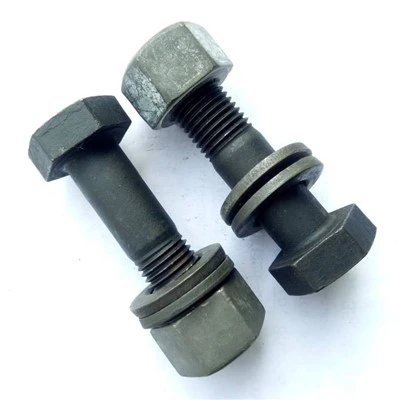
If you’re ready to order, or just have questions, reach out to me to chat about your washer needs. I’m here to help.
Specialty Bolts References:
- Machinery’s Handbook, 31st Edition. Industrial Press Inc., 2020.
- Fastener Standards for General Applications. American Society of Mechanical Engineers (ASME), 2018.
- Design and Analysis of Machine Elements. R.S. Khurmi and J.K. Gupta, Eurasia Publishing House, 2019.
Handan Dongchao Hardware Products Co., Ltd.
As one of the most professional washers manufacturers and suppliers in China, we have world-leading production equipment and strong manufacturing capabilities. Please feel free to wholesale bulk high quality washers in stock here and get pricelist from our factory. Customized orders are welcome.
Address: West of Xiaobeizhuang Village, South of Beizhangzhuang Village, Hanshan District, Handan City
E-mail: david@dcscrews.com
WebSite: https://www.dc-screws.com/
